.png)
CIVICS 101
BRANCHES OF GOVERNMENT
At all levels of government, from your local municipal offices all the way up to Washington DC, duties and responsibilities are divided into 3 branches:
-
Executive Branch: Leads, manages, oversees government through administration and enforcement of laws.
-
Legislative Branch: Writes laws
-
Judicial Branch: Interprets laws and evaluates legal conflicts.
This separation of powers is known as “checks and balances,” and it's supposed to help improve accountability and balance of power within government.
Many (but not all) offices are 4-year terms. Most are elected positions, but some are appointed.
.png)
PUBLIC OFFICES
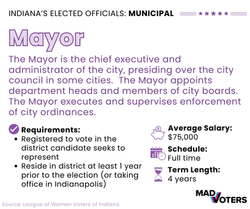
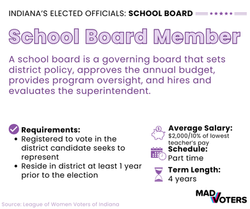
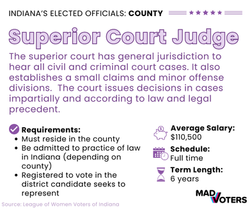
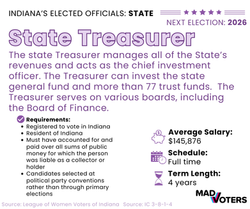
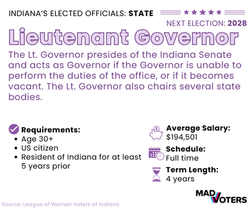
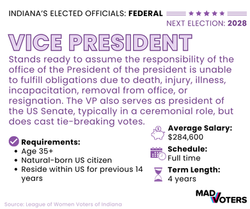
There are many public offices that you can run for. They have different requirements and responsibilities. The municipal, or city level, of government creates local ordinances and oversees city planning and infrastructure, like parks or first responders. County governance is similar to municipal, but applies to all residents in the county, and helps manage roads and property outside of city limits. State government is MADVoters' focus area, and includes the state legislature. The federal government includes the President and Congress.
 |  |  |
|---|---|---|
 |  |  |
 |
 |  |  |
|---|---|---|
 |  |  |
 |  |  |
 |  |  |
 |  |  |
 |  |  |
 |  |  |
|---|---|---|
 |  |  |
 |  |  |
 |  |  |
 |  |  |
|---|---|---|
 |  |
TYPES OF ELECTIONS
The primary elections occur in May, six months before the general election in November. Think of the primaries as the nomination that determines which candidates appear on the ballot in November. In Indiana, voters do not have to register with a party. Voters choose their preference between the Democratic or Republican ballot for the primary, and can vote for a mix of parties at the general election.
Municipal elections occur every four years. They include positions like mayors and city council members. This is your chance to influence city or town governance. No state, county, or federal offices are on the ballot during municipal election years.
The presidential elections occur every four years; halfway through the president’s term is when the midterm elections occur. Both of these elections include Statehouse, county, and Congressional races.